CS2 · Valve Corporation · 2023
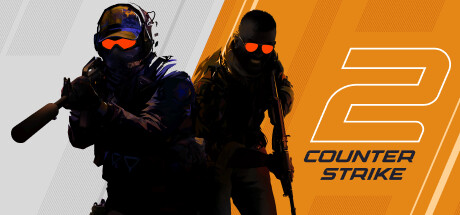
Counter-Strike 2
5v5 tactical FPS on Source 2, the competitive esports standard
5v5 tactical FPS developed by Valve Corporation, launched in September 2023 as the successor to legendary CS:GO. Free-to-play on Source 2 engine, global esports reference with two annual Majors and the most established competitive FPS base in the world.
Tools
17

Match history
3

Demo analysis
1
Competitive platforms
2

Skin marketplace
3


Lineups database
1
Live tracking
1

Comparisons
5FaceitvsESEA
Faceit for day-to-day competitive matchmaking: playable free tier, massive base, up-to-date anti-cheat, and fast queue in most regions. ESEA for structured season leagues with divisions and promotion/relegation, or if you already hold a legacy account with history. Both are now owned by ESL FACEIT Group, but the active focus migrated to Faceit.
HLTV.orgvsLiquipedia Counter-Strike
HLTV when you want what's happening today: weekly rankings, news, downloadable demos, and the HLTV Rating the scene uses to talk about players. Liquipedia when you need factual structure: a tournament's exact format, detailed prize pool, or a clean transfer history for a team. Most serious fans use both.
LeetifyvsCS Stats
Use Leetify when you want coaching feedback that tells you what to fix (aim, utility, trades) benchmarked against the rank above you, assuming you'll pay Pro for the real value. Use CS Stats when you just want a quick lookup of KDA, per-map win rate, and ELO evolution with no login, no desktop client, and no subscription.
scope.ggvsLeetify
scope.gg when your bottleneck is utility and you want to watch your smokes, flashes, and molotovs replayed in a 2D viewer to understand what failed and when. Leetify when you want a first structured coaching pass: per-category scores (aim, positioning, trades) benchmarked against the rank above so you know what to fix first.
Tracker.gg CS2vsCS Stats
Use CS Stats if you want the fastest, most CS-native tracker: Steam ID lookup with no login, ESEA integration, and the familiarity the CS community already has. Use Tracker.gg CS2 if you already live in the Tracker Network through Valorant, Apex, or Marvel Rivals and want your CS2 stats under the same account, with a UI in your language.
Tool stacks
1Latest news
Creators
5
3kliksphilip
British CS veteran since the CS:S era. His content is among the most distinctive in the scene: experiments on how the engine works, pedagogical analysis of movement and mechanics, version comparisons, and 'what would happen if...' questions answered with self-run tests. Calm tone, no hype, documentary-style narration. The quintessential educational voice of CS, complementary to pure tutorials like WarOwl.

launders
Canadian ex-pro who pivoted to content creator and coach. His channel description — 'counter-strike 2 elitist' — captures the approach well: dense technical analysis, pro demo review, utility setup breakdowns, honest commentary on meta and Valve decisions. Not content for newcomers; assumes you understand the game and want to go deeper. For serious intermediate/high-level players focused on improvement, mandatory reference.
mixwell
Spanish CS ex-pro, one of the most recognized voices in the Spanish-speaking competitive FPS scene. His career included teams like G2 and OpTic. Today he combines Twitch streams with YouTube videos covering gameplay, analysis, and competitive commentary, mainly CS2 and Valorant. For Spanish-speaking audiences wanting pro perspective from a real case, mixwell is an obvious anchor.

ohnePixel
German creator specialized in CS2 / CS:GO skins. His content covers the skin market from several angles: rare items, investing strategies, case history, and reactions to post-update market shifts. Keeps an honest tone about skin trading risks (volatility, scams, depreciation after Valve changes) rather than selling it as safe investment. For players interested in the game's economy beyond playing, a reference.

WarOwl
Historical anchor for Counter-Strike tutorials. Started covering CS:GO from its 2012 launch and stays active in CS2. His niche is clear: accessible explanations for new or intermediate players, friendly tone, polished editing, and well-paced complexity ranges. Doesn't assume prior background. If you want to learn a concept without fighting jargon, WarOwl is first stop.
Resources
Beginner guides
Entry resources: economy, callouts, aim fundamentals, and basic positioning.
5 resources
Map guides
Per-map walkthroughs: callouts, angles, meta positions, smokes, and rotations.
5 resources
Aim improvement
Resources to improve precision, recoil control, crosshair placement, and reflexes.
5 resources
Update coverage
Analysis of Valve changes: weapon balance, maps, mechanics, and meta shifts.
5 resources
Esports coverage
Majors, IEM, BLAST, ESL Pro League: analysis, predictions, pro play recaps.
5 resources
About the game
What it is
Counter-Strike 2 (CS2) is a 5v5 tactical FPS developed and published by Valve Corporation, launched on September 27, 2023. It replaces Counter-Strike: Global Offensive (CS:GO) in the same Steam entry (appId 730), inheriting 12 years of competitive evolution and the entirety of the skin economy accumulated during that period.
The base gameplay maintains the franchise formula since 1999: two teams of 5 players (Terrorists vs Counter-Terrorists) compete on asymmetric maps where one team must plant and detonate a bomb (C4) at one of two designated sites, while the other tries to prevent it or defuse it. Rounds last 1 minute 55 seconds, no intra-round respawn, and matches are best of 24 rounds (first to 13 with side switch at halftime).
CS2 runs on Source 2 engine, which replaced the original Source that CS:GO used for over a decade. This brought significant technical improvements: dynamic volumetric smoke grenades (they interact with bullets and explosions), revamped lighting, more precise hitboxes, sub-tick networking that records actions at higher precision than the server tickrate, and new workshop tools.
The model is free-to-play. Monetization comes exclusively from cosmetics (skins, stickers, agents, gloves, music kits) and optional Prime Status Upgrade (~$15 USD), which unlocks Premier competitive matchmaking, weekly drops, and stricter anti-cheat filters. The skin economy is one of the largest ecosystems in gaming: in 2025 it generated $1.16 billion USD through cases and marketplace fees.
Main features
Source 2 engine and technical modernization: the migration from Source to Source 2 was the biggest change in Counter-Strike's history. Smokes are now volumetric and react to bullets, explosions, and movement; the sub-tick system records inputs with more precise timestamps than the server tickrate; dynamic lighting affects visibility in ways not possible before. The transition was controversial at first (some players reported feeling CS:GO was more responsive) but the community mostly adapted.
Free-to-play with massive skin economy: unlike original CS:GO which was paid, CS2 is completely free. What it monetizes is the cosmetics ecosystem: weapon skins that rotate in cases, agents (custom character models), stickers to customize weapons, cosmetic gloves. Some rare skins (factory new, special pattern, special sticker capsule) have sold for over $400,000 USD on secondary marketplaces. The economy is so large it generated $1.16 billion in 2025 in Valve revenue alone, not counting peer-to-peer trading on Steam Marketplace that processes hundreds of millions more.
Two annual Majors sponsored by Valve: Counter-Strike is one of the few esports where the developer directly organizes its highest tournaments. Current Majors have 32 teams, $1.25M USD prize pool, Swiss + playoffs in arena format, and happen twice a year. For 2026: IEM Cologne Major (June) and PGL Major Singapore (year-end). Winning a Major is the most prestigious achievement in a professional player's career.
Varied game modes: Premier (main ranked with public ELO system), Competitive (standard 5v5 matchmaking), Casual, Wingman (2v2 on reduced maps), Deathmatch (FFA for warmup), Arms Race (gun progression), Retakes (rounds focus on post-plant). Each mode serves a different purpose: Premier for serious ranked, Wingman for duos, Deathmatch for warming up before competitive.
Map pool curated by Valve: the official active pool rotates periodically. Core maps like Dust II, Mirage, Inferno, Nuke, Anubis, Train have been in the competitive meta for over a decade. Maps like Cobblestone, Cache, Train have entered and left the active pool multiple times. This creates stable identity: learning a map is investment that pays dividends for years.
Anti-cheat VAC + VAC Live: VAC (Valve Anti-Cheat) is Valve's historical system, based on signatures of known cheats. VAC Live, added in CS2, detects cheats in real-time during a match and kicks the player (canceling the match without ELO loss for the rest). It's controversial: many players report cheaters remain a problem in low/medium ranked levels, which leads the community to use third-party platforms like Faceit with stricter anti-cheat.
Robust third-party anti-cheat community: Faceit and ESEA maintain parallel competitive matchmaking platforms with proprietary, more invasive anti-cheats. For many serious players, Faceit is where "true competitive" is played and Faceit Elo rankings (ranks up to 5000+) are a more respected reference than Valve's official ranking.
The tool ecosystem
CS2 has one of the most mature tool ecosystems in gaming, primarily because of:
Public API and public demo files: Steam exposes match data and CS2 records complete demos of every match in .dem format. This allows third-party tools to analyze demos and extract detailed metrics (HLTV rating, KAST%, ADR, opening duels, clutch rates, utility damage) without needing Valve cooperation.
Tier-1 esports with public data: HLTV.org has existed since 2002 and maintains the most complete esports database of any game. Every pro match from the last 23 years has a dedicated page with stats, demos, maps, picks/bans, player ratings. This created a culture of deep statistical analysis in the community.
Skin economy as metagame: the skin trading ecosystem generated specialized tools for pricing, investment prediction, sniping undervalued trades, wear comparison (float values), and sticker verification. It's an entire sub-ecosystem of tools that doesn't exist in other games.
Established coaching and improvement community: with tier-1 esports since 2014, there are generations of ex-pros and coaches who migrated to content creation and coaching platforms. Tools like Leetify (your game data with behavior tags) and scope.gg (similar) built their businesses on this demand.
The most common types of tools in CS2 are:
Esports databases with historical stats (HLTV, Liquipedia).
Match history and personal performance trackers (Leetify, CS Stats).
Third-party competitive platforms (Faceit, ESEA).
Demo analyzers (Leetify, scope.gg).
Lineups databases for grenades (Simple Radar, prac.gg).
Marketplace tools for skins (CS.MONEY, Steam Analyst, csgostash).
Training maps and practice servers.
Live tournament and match tracking.
Who this game is for
Good for: players seeking competitive FPS with brutal learning curve but deep reward, fans of mechanic-based games where 10,000 hours still offer marginal improvement, audiences interested in esports with established base since 2014, players who value game economy (rounds with strategic economy management) over pure action, those looking for a "forever game" with guaranteed stable player base.
Not the best option for: casual players without time to invest in mechanics (recoil patterns, smoke lineups, memorized callouts take hours of deliberate practice), gamers who prefer fast respawn and short matches (1:55 rounds without respawn can frustrate), audiences that reject competitive environments (the CS community is notorious for toxicity, especially in low ranked levels), macOS users (CS2 is NOT compatible, Valve discontinued support in 2023), people who prefer matches with RPG elements/persistent progression (CS is pure skill, no levels that affect gameplay).
The learning curve
CS is notorious for being one of the most mechanically demanding games in current gaming:
Basic mechanics (first 100 hours): learning map callouts, recoil patterns of main weapons (AK-47, M4A1-S, M4A4, AWP), basic economy (when to full-buy, eco round, force buy), basic positioning, crosshair placement.
Intermediate mechanics (100-500 hours): per-map smoke lineups, flash lineups, molotov spots, anti-flash, jiggle peeking, counter-strafing, pre-aim, peek timing, utility usage in post-plant scenarios.
Advanced mechanics (500-2000 hours): lurking timing, passive info-gathering, clutch decision making, eco frag setups, deep economy management, per-map anti-strats, team-coordinated nade combos.
Top tier mechanics (2000+ hours): frame-perfect micro-positioning, prefiring by audio cues, IGL strategy calling, mid-round adapt, anti-stratting the opponent, complex utility coordination in team play.
The curve doesn't flatten easily. Pros with 10,000+ hours still improve specific aspects. It's one of the aspects that makes CS an addictive experience for those who value perpetual improvement.
Why it remains relevant after 26 years
The Counter-Strike franchise started in 1999 as a Half-Life mod. Since then it evolved: Counter-Strike 1.6 (2003), Counter-Strike: Source (2004), Counter-Strike: Global Offensive (2012), and Counter-Strike 2 (2023). 26 years later, it remains the most-played competitive FPS in the world. The reasons:
Brutal skill ceiling: the game has little randomness and lots of expressive skill. This creates clear differentiation between skill levels and motivates perpetual improvement.
Established and growing esports: 2 annual Majors, IEM, BLAST, PGL, Esports World Cup ($2M prize pool). The professional scene keeps growing in prize pools and viewership every year.
Skin economy as retention mechanism: the emotional and financial investment in skin inventory is a powerful retention factor. A player with $500 in skins is unlikely to abandon the game.
Free-to-play without pay-to-win: zero entry barrier allows continuous influx of new players. With 210M+ registered accounts and ~20M MAU in 2025, the matchmaking pool is massive.
Valve maintains active development: although Valve's pace is slow by modern standards (no weekly patches like LoL), CS2 receives consistent updates since launch, including restoration of legacy modes that were missing (Arms Race in 2024, Retakes in October 2025).
For someone considering entering CS2 in 2026, the ecosystem is mature, tools are the most complete of any FPS, esports is in better shape than ever, and the player base guarantees healthy matchmaking for the next decade.